
Why You Feel Down When It Gets Dark Early: Daylight Saving Time and Mood
One evening you leave work and it’s still light out. A week later, it’s dark by the time you get home, and the whole day feels shorter and heavier. If you notice your mood, energy, or motivation dipping when the clocks fall back, you’re not imagining it, and you’re not alone. Here is what changes, what the research actually shows, and some general ways people make the darker months easier.
If you need help right now: if you are in crisis or thinking about harming yourself, call or text 988 (Suicide & Crisis Lifeline), or text HOME to 741741. Call 911 in an emergency. MultiGen Mental Health is not a crisis service.
What Changes When the Clocks Fall Back
In most of the United States, clocks move back one hour on the first Sunday in November. Mornings get a little brighter for a while, but sunset suddenly arrives an hour earlier, often before the end of the workday. Hawaii and most of Arizona don’t observe daylight saving time, so people there skip the jump, though the days still shorten with the season.
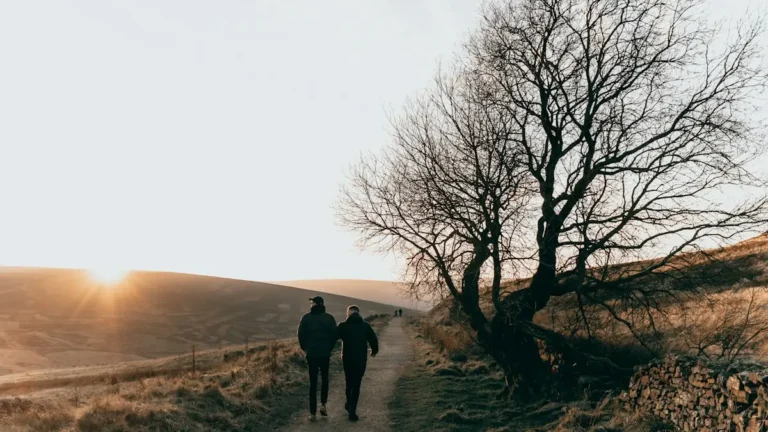
The hour itself is small. What many people feel is the combined effect of the abrupt loss of evening light and the steady shortening of days heading toward the winter solstice in late December. Commutes happen in the dark, outdoor time shrinks, and evenings can start to feel long and isolating.
What the Research Shows
The evidence is real but mixed, and it’s worth being honest about that.
- A large Danish study (Hansen and colleagues, Epidemiology, 2017) looked at 185,419 hospital contacts for depression between 1995 and 2012. It found that the switch from summer time to standard time was associated with an 11% increase in depression diagnoses, an effect that faded over about 10 weeks. The spring change showed no similar effect.
- A 2025 study from England (de Lange and colleagues, BMJ) looked at health records in the week right after each clock change and found a small drop in recorded depression and anxiety events after the autumn change, possibly because people gain an hour of sleep that night.
These findings measure different things over different time frames, so they don’t cancel each other out. A reasonable takeaway: the extra hour of sleep may help in the short run, while the loss of evening light over the following weeks is harder on some people’s mood. Everyone responds differently.
Your Body Clock, in Plain Words
Your body runs on an internal clock, sometimes called your circadian rhythm, that helps regulate sleep, energy, appetite, and mood across the day. Light is the main signal that keeps that clock on time. Morning light tells your body the day has started; darkness in the evening helps it wind down toward sleep.
When daylight shrinks and shifts, that signal gets weaker and less predictable. Some people adjust within days. Others feel out of sync for weeks: groggy in the morning, sluggish in the afternoon, and low in the evening.
General Habits Many People Find Helpful
None of these are treatments, but they are simple, low-risk ways to support your body clock and mood through the darker months:
- Get outside in the morning. Even a short walk or a coffee by a bright window in the first hours of the day gives your body a strong light signal.
- Protect your daylight. If you work indoors, step outside at lunch while the sun is still up.
- Keep a steady sleep schedule. Going to bed and waking up at roughly the same time, even on weekends, helps your clock settle after the change.
- Plan your evenings. Early darkness can make evenings feel empty. A regular call with a friend, a class, or a standing plan gives the week some shape.
- Stay connected. It’s natural to want to hibernate. Small, regular contact with people you care about helps counter that pull.
- Notice alcohol and screens late at night. Both can disrupt sleep, which can make low mood harder to shake.
What About Light Boxes?
You may have heard of light therapy. According to the National Institute of Mental Health (NIMH), it involves sitting near a very bright light box, usually in the morning, and it is one option clinicians may discuss for seasonal depression. It isn’t right for everyone, especially people with certain eye conditions or who take medications that increase light sensitivity. If you’re curious, talk to a health care provider about whether it makes sense for you before trying it.
When It’s More Than a Rough Few Weeks
Feeling a bit flat as the days get shorter is common. It’s worth talking to a doctor or licensed mental health professional if low mood lasts or gets worse, if you lose interest in things you usually enjoy, if sleep or appetite changes a lot, or if it’s getting in the way of work, relationships, or daily life. NIMH notes that seasonal affective disorder is related to changes in daylight, not the calendar, and that it is more serious than the “winter blues.”
If you’re not sure where to start, How Online Counseling Works explains one lower-barrier option. You might also find Anxiety Explained and When Work Stress Becomes a Health Problem useful as the season gets busier.
MultiGen Mental Health is not yet accepting clients. Join the waitlist to hear when intake opens in your state.
Related Reading
- Anxiety explained: what it is, how it feels, and when to get help
- Stress and burnout: what’s the difference?
- Mental health during life transitions
Sources: Hansen BT et al., “Daylight Savings Time Transitions and the Incidence Rate of Unipolar Depressive Episodes,” Epidemiology 2017;28(3):346–353; de Lange MA et al., “Acute effects of daylight saving time clock changes on mental and physical health in England,” BMJ 2025;391:e085962; National Institute of Mental Health, Seasonal Affective Disorder. Updated October 26, 2026. Content on this site is for educational purposes only and is not medical or mental health advice. MultiGen Mental Health is not a crisis service. If you are in crisis, please call or text 988 (Suicide & Crisis Lifeline).